A Guide for Those New to Data Centers
The explosion of AI, machine learning, and high-performance computing has turned GPUs into mission-critical infrastructure. As organisations scale beyond experimentation, many quickly discover that public cloud platforms can become prohibitively expensive, operationally restrictive, or technically unsuitable for sustained GPU workloads.
This is where GPU colocation enters the conversation. For teams new to data centers, however, colocation can feel complex and opaque. Power density, cooling constraints, connectivity, and long-term contracts introduce a level of infrastructure decision-making that many organisations have never had to face before.
This guide is designed to close that gap. It explains what colocation is, why GPUs fundamentally change data center requirements, and what first-time buyers must understand to avoid costly mistakes.
An Introduction to Colocation for First-Time Buyers
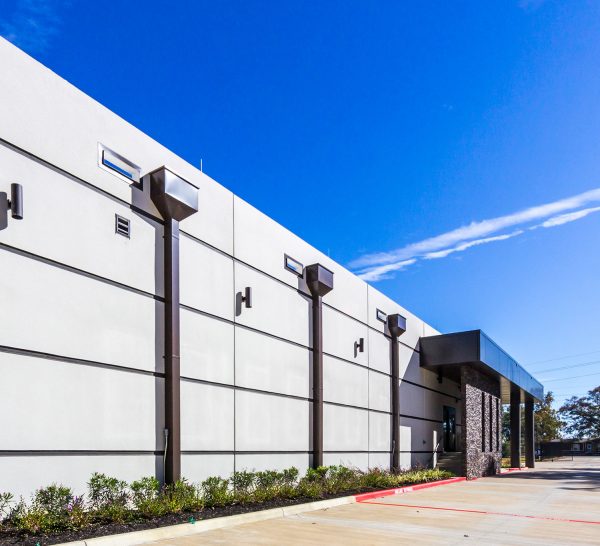
Colocation is an infrastructure model where you own and manage your hardware, such as GPU servers, but place it inside a third-party data center, like one of our Houston data centers. The colocation provider (us, in this scenario) supplies the building, power, cooling, physical security, and network connectivity, while you retain full control over the equipment itself.
For organisations accustomed to public cloud, this represents a shift in responsibility. Instead of renting abstracted compute resources, you are making explicit decisions about hardware specifications, power draw, cooling methods, and physical deployment. Compared to running an on-premises data center, colocation removes the need to design, build, and operate a facility from scratch, while still offering significantly more control than cloud.
GPU workloads often sit uncomfortably in the cloud long-term. Costs can scale unpredictably, performance can vary, and access to the latest GPU models is not always guaranteed. Colocation provides a middle ground, offering predictable costs, hardware control, and the ability to design infrastructure specifically around GPU requirements.
Read this for more on cloud vs colocation.
Why GPUs Need Specialized Data Centers
GPUs introduce a very different operating profile compared to traditional CPU-based servers. They consume far more power, generate significantly more heat, and place greater demands on both cooling systems and network architecture. Many data centers were never designed to support these high density colocation conditions.
A single modern GPU server can draw as much power as an entire rack of legacy equipment. Multiply that across multiple servers, and power density becomes the primary limiting factor. Heat output scales accordingly, making thermal management a central concern rather than an afterthought.
Because of this, not all colocation facilities are suitable for GPU deployments, even if they advertise themselves as “AI-ready.” Understanding how GPUs stress infrastructure is essential to evaluating whether a provider can actually support your workloads at scale.
Read more on GPUs in data centers here.
Defining Your Requirements
One of the most common mistakes first-time buyers make is engaging colocation providers before fully understanding their own requirements. Your colocation decisions should be driven by your workload characteristics rather than data center marketing.
You need clarity on how your GPUs will be used, whether for training, inference, or mixed workloads, as this affects power profiles, cooling demands, and network design. It is equally important to understand how quickly you expect to scale. A deployment that fits comfortably today may become constrained within a year if growth is not planned for from the outset.
Providers can only design suitable solutions if requirements are well defined. Without this groundwork, buyers risk committing to infrastructure that cannot support future needs.
Power: The Primary Constraint in GPU Colocation
Power is the single most important factor when buying colocation for GPUs. Modern GPU racks commonly require between 20 and 40 kilowatts per rack, and in some advanced configurations, significantly more. Many facilities simply cannot deliver sustained power at these levels.
Beyond raw capacity, buyers must understand how power is delivered and billed. Redundancy models such as N, N+1, or 2N determine resilience but also affect cost and availability. Power pricing may be based on committed usage, peak draw, or blended models, each with different financial implications.
A data center that advertises sufficient total megawatt capacity may still be unsuitable if it cannot deliver that power where and how your racks require it.
Read more on data center redundancy here.
Cooling: High-Density Air vs Liquid
Cooling is one of the most misunderstood aspects of GPU / AI colocation, particularly for organisations new to data centers. While GPUs unquestionably generate more heat than traditional servers, it is a misconception that liquid cooling is always required for high-density deployments.
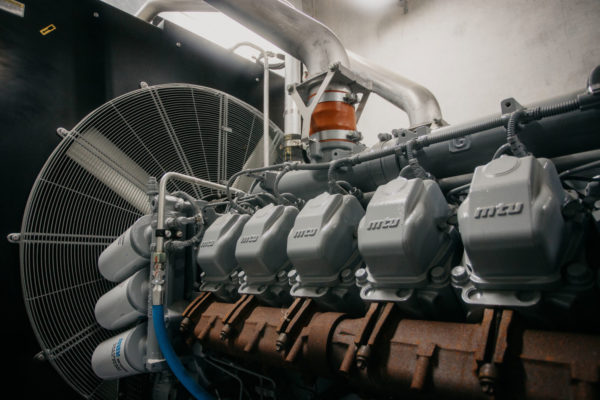
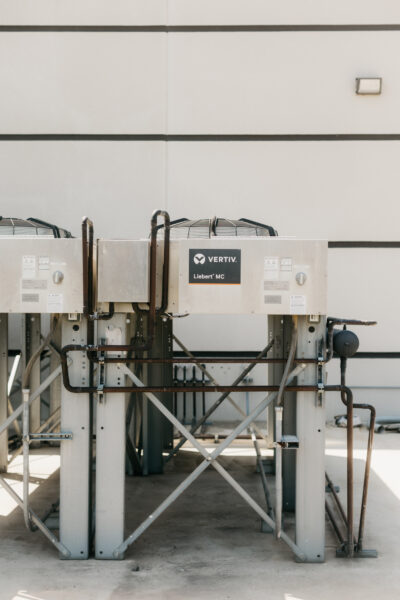
Well-designed high-density air cooling can support many modern GPU configurations effectively. Facilities purpose-built for high-density workloads can deliver significantly higher airflow, hot-aisle containment, rear-door heat exchangers, and optimised rack layouts that allow air cooling to scale far beyond legacy limits. When implemented correctly, these approaches can provide reliable, predictable thermal performance without introducing additional operational complexity.
Liquid cooling, including direct-to-chip and immersion cooling, is increasingly used for the most extreme density scenarios, but it is not without risk. Water-based systems introduce new failure modes that simply do not exist in air-cooled environments. Poorly designed or maintained liquid cooling systems can lead to leaks, condensation, corrosion, and downtime, with potentially severe consequences for high-value GPU hardware.
For first-time buyers, the decision should not be framed as air versus liquid in absolute terms. Instead, it should focus on whether the data center’s cooling strategy – whichever method is used – has been proven at the required density, is supported by experienced operations teams, and can be scaled safely over time. Retrofitted facilities that offer liquid cooling without long-term operational maturity may carry more risk than purpose-built air-cooled environments operating within known limits.
Ultimately, the best cooling solution is one that matches your actual thermal load, is operationally robust, and minimises unnecessary complexity while protecting performance and hardware longevity.
Read more on data center cooling here.
Location, Latency, and Network Connectivity
Despite the abstraction of cloud computing, physical location still matters for GPU colocation. Latency to end users, data sources, or cloud platforms can materially affect performance, particularly for inference workloads or hybrid architectures.
Connectivity options also vary significantly between facilities. Carrier-neutral data centers typically offer greater flexibility, allowing organisations to connect to multiple network providers and cloud on-ramps. Network and cross-connect costs and availability should be assessed early, as they can become a meaningful portion of total spend.
We offer free cross connects to all customers to encourage interconnection.
Security, Compliance, and Physical Access
For organisations new to colocation, physical security is often an unfamiliar concern. Unlike cloud environments, you are responsible for hardware that exists in a physical space accessed by people.
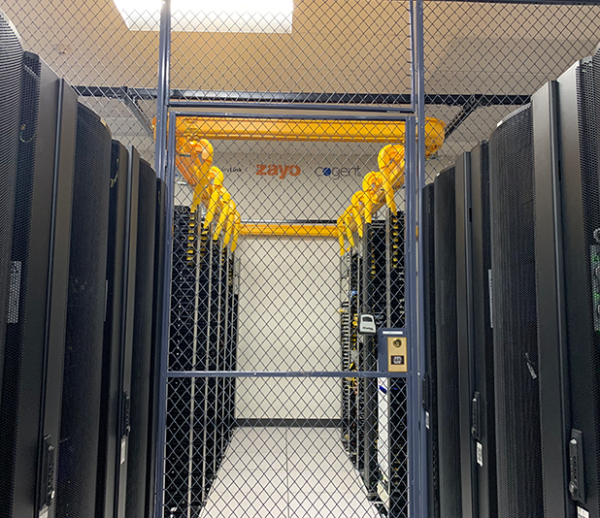
Modern data centers implement layered security controls including biometric access, CCTV, and segregated environments such as private cages. Compliance certifications can provide assurance, but buyers should also consider operational factors such as how often staff need physical access and what remote hands support is available.
Read more on data center security here.
Contracts, Pricing Models, and Hidden Costs
Colocation contracts are typically long-term and complex. Pricing extends beyond rack space to include power commitments, connectivity, remote hands, and setup fees. Overages for power usage or changes to configuration can quickly increase costs if not clearly understood.
Flexibility is particularly important for GPU deployments, where requirements can evolve rapidly. Buyers should carefully evaluate contract length, scalability options, and exit clauses before committing.
Here’s what to look out for in a master service agreement.
Managed vs Unmanaged Colocation for GPUs
Managed colocation offerings can bridge the gap for teams without deep data center expertise. These services may include installation, monitoring, maintenance, and troubleshooting, reducing operational burden.
However, managed services vary widely in scope and quality. Buyers should clearly understand what is included, what remains their responsibility, and how service levels are defined.
Read more about managed colocation here, and our own service Colo+.
GPU Colocation Readiness Checklist
Before engaging a colocation provider, ensure you can confidently answer the following:
- Do we understand our current and future power requirements per rack?
- Have we validated cooling compatibility for sustained GPU workloads?
- Do we know our expected growth timeline and scaling needs?
- Have we accounted for total cost, including power, connectivity, and services?
- Do we understand contract flexibility and exit conditions?
- Have we confirmed that the facility has real GPU deployment experience?
If any of these questions remain unanswered, further planning is essential.
Conclusion: Making an Informed, Future-Proof Decision
Buying colocation for GPUs is a strategic infrastructure decision, not a simple hosting choice. For teams new to data centers, the learning curve can be steep, but the payoff in performance, cost predictability, and control can be substantial.
With clear requirements, careful provider evaluation, and a long-term perspective, GPU colocation can become a powerful foundation for AI and high-performance computing at scale.